King Naresuan
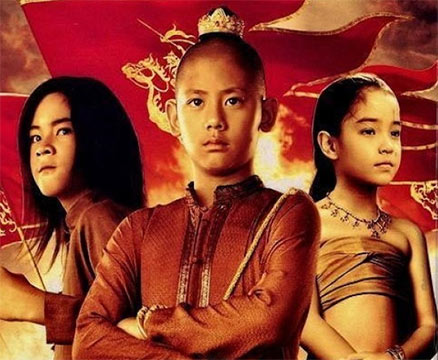
This was the official website for the 2007 movie, King Naresuan. The film concerns the life of King Naresuan, who liberated the Siamese from the control of Burma. Born in 1555, he was taken to Burma as a child hostage; there he became acquainted with sword fighting and became a threat to the Burmese empire.
Content is from the site's 2007 archived pages.
OCTOBER 1, 2007 | Variety
Richard Kuipers
"King Naresuan" is a lavish drama with a screenplay that's a major challenge.
Thailand’s highest-grossing film until it was bested by its sequel, “King Naresuan” is a lavish historical drama with a screenplay that’s a major challenge for non-Thai auds to follow. The first chapter in royal helmer M.C. Chatrichalerm Yukol’s three-part biography of the 16th century hero is populated by a telephone book’s worth of characters and Byzantine plotting around the story of the future monarch’s childhood. Released locally Jan. 18, 2007 the blockbuster is highly unlikely to play offshore, though carefully selected parts could be worked into an export-viable condensation.
Originally a single entity funded by a $20 million government grant, “Naresuan” ballooned into two-separate films , with “King Naresuan: The Reclamation of Sovereignty” shipped into cinemas while the first film was still playing. A third chapter is set for release Dec. 5, the 80th birthday of revered Thai King Bhumibol Adulyadej. At double the budget of Yukol’s previous epic, “Suriyothai” (2001) — later reworked into the Francis Ford Coppola-presented “The Legend of Suriyothai” (2003) — “Naresuan” is also popular entertainment made in the national interest of a land where royalty is treated with the utmost respect.
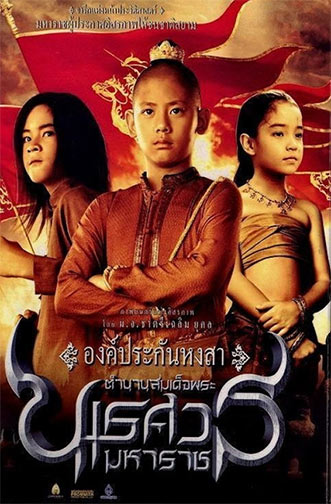 Through a maze of maps and voiceovers relating to the state of play in the region in 1564, it emerges that 9-year-old Prince Naresuan of Ayutthaya (roughly modern Thailand) is to be held hostage by dominant power Hongsawadee (Burma) to ensure the smaller state’s fealty. Already greeting the heads of rival kingdoms with, “I only show respect to those who deserve it,” the spirited lad (Pratcha Sananwatananont) is immediately adopted by wily Burmese ruler Buyinong (Sompob Benchanukul) as his favorite son.
Educated by wise monk Kanchong (Sorapong Chatree) and eschewing the trappings of his royal status, Naresuan finds playmates in street urchin Bunthing (Jirayu La-Ongmanee) and cute girl Maneechan (Suchada Chekly). Most accessible part of the drama is the bond formed by the odd trio, whose cheeky adventures prove much more entertaining than all the maneuverings in Burma and surrounding kingdoms.
Stodgy through non-Thai eyes — yet vital in expressing the real way in which protocols were observed — are the many lengthy scenes in which prostrate subjects listen to rulers plotting from lofty thrones in ornately decorated palaces. Theatrical thesping and an inevitably limited range of shooting options cause many of these sequences to haze out into an amorphous mass.
Infrequent battle scenes with thousands of extras dressed in eye-catching armor are excitingly staged, though the old-fashioned execution recalls “El Cid”-era epics much more than hyperkinetic modern spectacles like “300.”
Adequate performances are overshadowed by the no-expense-spared look of the enterprise. Production design, costuming and lensing on a 700-acre purpose-built set are all deluxe. Some not-so-deluxe CGI creeps in during battle scenes.
King Naresuan
Production
Crew
With
Observations: I am not Thai, yet with the help of my husband (who is), I thoroughly enjoyed the film. There were lots of hits of the pause button on the DVD player so he could explain some arcane character. I happened to work in the art department of a film studio so I could really appreciate the production design, and costuming. The 700-acre specifically built deluxe set was impressive considering when the film was made. We are all so jaded with the special CG effects that we all come to expect in such films today. Yet the battle scenes with thousands of extras in their eye-catching armor were excitingly staged and visually arresting. I would love to work on such an epic film. Meanwhile I have started to read King Naresuan the Great: Warrior King of Thailand by Robert Smith. This novel blends historical accuracy with the life and the legend of King Naresuan the Great and endeavors to put the tumultuous events of the period in context. It probably would have been a good idea to have read it before watching any of the Thai films about King Naresuan. However the book was published in 2015, so it wasn't even available when I first saw the movies.
Update: 2022
I just returned from visiting my mother at Hart Heritage Estates, a lovely facility for assisted living in Bel Air, Maryland. It's so convenient to where I live. My children are able to visit her when they come to our place for the holidays. My mother has made friend with several Thai ladies, Zella M and Unella K, who are also at Hart Heritage Estates. The last time I was there I mentioned the movie, King Naresuan, and how I enjoyed it the first time I saw it. Both of them were familiar with the movie. I promised I would see if I could get a CD of the movie. I was actually able to find it on Amazon under the title Kingdom of War (Part 1 & 2). We only watched the first part today. And just like when I watched it with my husband a while back, I would pause the movie so either Zella or Unella could explain so point. All in all it was a successful visit. Every time I leave the facility at the Hart Heritage Estates I marvel at how lucky we were to be able to find space there. The drive up the long roadway through the woods is so pleasant. The independent senior living offers spacious rooms, community activities, religious services, entertainment, beauty salon, and a homey coffee cafe in the morning. My mother enjoys walking grounds and bird watching in the afternoons. She particularly likes that she can continue gardening there. I feel the staff are thoughtful and compassionate creating a caring community environment.
I learned today that Zella adores Khao Niaow Ma Muang (mango sticky rice) a classic Thai dessert. It's heavenly and scrumptious. It's one of my favorite desserts. I think I will make it for my next week's visit when we plan to watch the second part of Kingdom of War.
IMDb REVIEWS
A beautiful, yet not so fulfilling spectacle...
********Author: Marshall Tuck from United States
23 January 2007
The Legend of Naresuan was originally planned a one long epic film that would contain all the historically facts and fiction; however, later compromised by Momchao Chatrichalerm Yukol to be cut into three separate films; and hence crippled by this. The first film of the trilogy was planned to be an explosion of Siamese pride and euphoria, not only for its history, but also a revitalization of Thailand's decrescendo of its movie industry. The film overall was quite satisfactory, from the emotional flashbacks of how the great Siamese kingdom of Ayodhya was so easily and effortlessly relinquished; to the exhilarating scenes of the royally-endorsed cockfight between the Burmese heir-apparent's son's cock and Naresuan's. The witty scenes between Naresuan, his guiding monk, Boonthing, and Manichan add seriously need comic relief to the film; yet at the end of the film; most would agree that it was over all too abruptly; and are forced to tie up loose ends in possibly another six hours of storytelling. In short, engulf but unfulfilled trilogy-opening film.
worth watching
*******
Author: skillysantos from United Kingdom
25 January 2014
although this film was to be done in one long 'epic' feature film, it was instead broken down to many films. Looking upon this film and seeing it was made in Thailand, the first thing going through my head was that this film may be like the terribly disgusting Ong Bak film that lacked everything but the story. I was wrong. This film doesn't lack much but certainly deserve the rating it has on IMDb. Because it was broken down to fit in the time schedule, we don't know how many days have passed where we see lots of scenes in daylight and it seems like one whole day but it isn't. It started off slowly but gradually get into it. nevertheless an amazing film with a lot of good scenes and definitely brings us into the story for the next film.
Currently best Thai epic movie. Still, there's room to improve.
*******
Author: Ruxo from Bangkok
3 March 2007
After seen two episodes of this movie, I can say it's better than Suriyothai in every aspect, especially in story telling. But it's still not good enough to give the audience of its full picture. Time in movie's confusing, at any moment, I couldn't know whether it'd been a day or a month. Just felt that people moved from city to city so fast. The film also spent significant time on side line stories that, IMHO, unnecessary. However, I like sound effect and music, it fitted nicely with many scenes. Especially, in episode 2, it gave great feeling in many battle scenes. Totally, I like this movie. I consider it as the best & great Thai movie for current time and hope to see it better in future time.
A bit hard to follow, but overall very worthwhile
*********
Author: fredcdobbs5 from California
11 May 2016
"Kingdom of War"--which was the title I saw it under in a two-disc DVD set from Magnolia Home Entertainment--has some things going against it but a lot more going for it. For Westerners unfamiliar with Thai history, it gets a bit confusing because so many historical names and places are mentioned and the shifting political and military alliances change so often that it's hard to tell the players without a scorecard and, as other reviewers have mentioned, the acting is, at times, somewhat stilted. Also, I know that royalty is revered in Thailand, possibly more so than in other countries, but seeing the complete subservience of everyone to the various kings and lords--there were even scenes of people walking toward the king on their knees because apparently no one is allowed to stand taller than the king, something I'd never seen before--is somewhat hard for Westerners to take (we're much more comfortable cursing and swearing at our leaders than prostrating ourselves in front of them, as much as they'd no doubt probably like us to).
That's all small potatoes, though. Overall, I enjoyed this film way more than I thought I would. It's an epic in every conceivable sense of the word--thousands of extras, huge and fantastic sets, beautiful costumes and interiors (palaces, throne rooms, etc.), and truly spectacular battle scenes. The story--after you finally figure out who is who--is fascinating and not all the acting is stilted; the actress who plays Princess Lekin is not only one of the most ravishingly beautiful women I've ever seen but gives a first-rate performance, possibly the best one in the film. The man who plays King Nerusuan--the Special Features section, which you should really watch, says he is actually a Thai Army colonel who was hired because the producers wanted someone with military experience to play one of Thailand's great military heroes--also contributes an excellent job, along with several other actors in lesser roles (the head monk and Prince Menechan, among others).
As I said, it's a bit hard to slog through in the beginning, but once you get the different characters, kingdoms, etc., straightened out, it's an incredibly enjoyable film, both visually and story-wise. I recommend it.
Thailand's record-breaking movie
********** Author: phomthai2 from Thailand
24 January 2007
From the English-language newspaper 'The Nation' in Thailand:
'King Naresuan'Shatters Box Office Record
"The Legend of King Naresuan" has set a new Thai box-office record, raking in 120 million baht in four days.
The film is tipped to be an all-time blockbuster.
Distributor Sahamongkol Film said the first in the Naresuan trilogy broke the previous record held by action film "Tom Yum Goong", which starred Phanom "Tony Jaa" Yerum, which took in 90 million baht in four days.
MC Chatrichalerm Yukol's historical epic is expected to follow the success of his 2001 "Suriyothai". That film remains the country's No-1 all time best-seller, with revenues of about 400 million baht.
At the time, "Suriyothai" set a new record of 75 million baht for its first four days.
An industry source said the first of the Naresuan trilogy could have dragged in even more if producers had printed extra copies.
Another factor against the film is its three-hour running time - limiting the number of sessions a cinema can screen.
"Only a quarter of the planned 260 copies were available during the first three days, and all prints were finished on Sunday only," said Sahamongkol distribution executive Chomsajee Techaratanaprasert.
The second episode will premiere on February 15, with the final one scheduled for December 5.
It is Thailand's most expensive film production to date, costing 700 million baht for all three.
Distributors of Hollywood films have avoided competing with the local epic. Golden Globe winner "Babel" and "The Queen" will be released on February 22 and March 8.
The second Naresuan movie will have to compete with the films "Charlotte's Web"; "The Queen"; and "I'm Cyborg but That's Okay", with South Korean heart-throb Rain in his acting debut.
- The Nation
Personal opinion:
There's a reason for all of the ticket sales. It's very good!
Elements of the Movie that Needs Improving
* Author: parhat from Bangkok, Thailand
28 May 2007
This is supposedly an epic story about a King Naresuan during his childhood era, which supposedly, in his later years protected the invading Burmese from conquering Thailand, by driving them out.
Basically it is actually a heresy to say the movie is not good for Thai audiences and hence, in my opinion it is overrated. However, this is on of the best of 3 part series of the movie. The best in my opinion is Part 3 (climax), followed by Part 1, and Part 2. Much of the complaints came to part 2, which doesn't exist historically and many audiences were left complaining about the main actors' escapades with women, which actually was in conflict historically as he had little time for that. This fact is actually generally well known by the watching audience, so basically the director just stepped on a very sensitive big toe of the audiences. Something that a director should not do since they are the ones who come to enjoy the movie.
The problem about this movie, which is actually Part 1 is that the movie, cinematic version has been adapted for the movie has actually changed so much of the story historically (known by a majority of the audiences) and in very successful dramatic stage plays that actually had gained a wide television audience acceptance in Thailand (another big blunder). The most common complaints I received from viewers is that, if only the cinematic movie had been more faithful to the original dramatic stage plays or most of the television version of this movie, but with better cinematography, it would gained a strong following, at least internationally. Cinematography, is o.k., in general, but I do received complaints from viewing the initial hour of the movie to be a bit too dark on the lighting. This movie is basically similar to George Lucas, Star Wars Episode I, in which actors, and actress are cardboard character, language are somewhat unnatural, but in addition is the problem of poor editing, long sequences of movies at points where it doesn't seem to contribute to the overall story.
Basically a good movie, at least for the Thai audiences anyway, is that it is historically accurate at least to what the audiences are generally aware of(it would be insulting to actually say something contradictory), or faithful to the original successful dramatic plays (much like Mr. Bean's Holiday, that used the same original movie that made Mr. Bean so successful), or another that departed so much from the formula of success was the Godzilla movie, done by the Emmerich.
The key of the movie's success, that could have improved is the addition of dramatic elements, the toning down of unneeded parts of the story, and I am sure about more than half of the movie can be edited out, and at least dramatic elements be added, at least initially in the start of the movie and getting the audiences attention, is something that needs a lot of improvement.
Back to basic emphasis is needed in the movie, which is the basic theme of the movie, or the message, is missing, which I think should be how Naresuan achieved his greatness, and his ability of cunningness, would at least be helpful. Most thematic elements here are actually missing, a more successful movie, while there is little truth, was The Curse of The Golden Flower. While that movie had little relevance historically, its major thematic elements were that the King tried to poison his wife. While many plot elements, especially during the fight scenes in elaborate traps, were bad and contrived, the actors and the intensity of the actors, actress were excellent. I think that thematic elements is sorely needed in this movie.
Most of this movie lacked the stress, intensity in the actors and actresses needed to move the audiences. One of the most important elements of the story besides Aristotle's claim that plots are more important character is not really true, at least for today's movie. While we do claim plots in many movie reviews to be important, it is that most important elements should be the Theme of the movie, and the Premise of the movie that the plots should support.
If the Premise of the movie is a historical one, at least the major historical elements should get the audiences to agree and enjoy the movie more so than audiences going into defensive, and just watching the plot goes from one part to another part of the movie. Otherwise you get busy body in the movie, much like Next 2007, without a message, and the believability elements, which is the primal force of Premise, is lacking, but has a strong weight in all of Kubrick's movie, especially Clockwork Orange and Dr. Strangelove.
If any directors want to have a good movie despite his bad editing, Kubrick's movie was a bit long, not well edited in many scenes, he still won the day because his premise for the story was strong and plot elements were there to prove his premise, which buildup to a strong message or a theme of the overall masterpiece, which we can sum up in few words, such as in Dr. Strangelove, that an accidental holocaust can happen. What about the possibility of the movie Naresuan? A good premise, where many plots element are supportive is the argument that one person, can indeed make a difference. Length of the movie is not of the essence. How many would complain Godfather is ever long a movie, which is about 175 minutes, but feels more like 30 minutes. If I had no intelligence in making any movie, there is one factor I will look that I know the movie will make it big: if people will not take their eyes off the screen for the entire movie, I have got a hit.
More Background On KingNaresuanMovie.com
KingNaresuanMovie.com served as the official website for The Legend of King Naresuan, one of the most ambitious and culturally significant film projects ever produced in Thailand. More than a promotional platform, the site functioned as a digital companion to a sweeping historical epic that sought to bring the story of one of Thailand’s most revered monarchs to modern audiences.
The website emerged during a period when film promotion was transitioning from print-heavy marketing to online presence, yet before the dominance of social media platforms. As such, it represents a distinct era of film marketing—one that emphasized narrative explanation, historical grounding, and cultural framing over trailers and viral content.
Though the site is no longer actively maintained, archived versions reveal a carefully structured resource that helped contextualize the film, explain its historical roots, and communicate the scope of its production. In many ways, KingNaresuanMovie.com stands as a digital artifact reflecting both the ambition of the film and the evolving role of the internet in global cinema promotion.
The Historical Figure Behind the Film
King Naresuan the Great is one of the most celebrated figures in Thai history. Born in 1555, he lived during a period when the Kingdom of Ayutthaya was under constant threat from the Burmese Taungoo Dynasty. As a child, Naresuan was taken to Burma as a political hostage—a practice common in regional power struggles of the time.
Rather than weakening him, this experience shaped Naresuan into a skilled military leader and strategist. After returning to Siam, he ultimately declared independence from Burmese rule and led a series of successful military campaigns that restored sovereignty to his kingdom.
His most famous act—the legendary elephant duel with a Burmese crown prince—became a foundational moment in Thai historical identity. Today, Naresuan is remembered not only as a warrior king, but as a symbol of resistance, independence, and national unity.
The importance of this historical context cannot be overstated, as it directly influenced the tone, structure, and reverence with which the film series was produced—and, by extension, how KingNaresuanMovie.com presented its content.
The Film Project: Scope and Ambition
The Legend of King Naresuan was conceived as a large-scale historical epic, comparable in scope to major Western productions such as Braveheart or Kingdom of Heaven, but rooted firmly in Southeast Asian history.
The project ultimately became a six-part film series released over nearly a decade. It was one of the most expensive and logistically complex productions in Thai cinematic history. Thousands of extras, extensive costume work, and massive purpose-built sets were used to recreate 16th-century Siamese and Burmese environments.
Unlike many historical films that condense events into a single narrative arc, the Naresuan films were structured chronologically and deliberately paced, allowing audiences to follow the king’s development from childhood to military leadership.
This long-form structure made the role of the official website especially important. KingNaresuanMovie.com functioned as a reference point where viewers could orient themselves in the storyline, understand historical relationships, and follow the evolution of the series.
Purpose and Design of KingNaresuanMovie.com
The website served several interconnected purposes:
-
Educational Resource
The site explained historical figures, political alliances, and cultural customs depicted in the films. This was particularly valuable for non-Thai audiences unfamiliar with Ayutthaya-era history. -
Promotional Platform
It provided official descriptions of each installment, cast and crew listings, and production background. -
Cultural Framing Tool
The site reinforced the idea that the film was not merely entertainment but a cultural project tied to national identity and historical remembrance. -
Press and Media Reference
Journalists, critics, and international distributors used the site as an authoritative source for production details and contextual background.
Visually, the site reflected early-to-mid-2000s design conventions: structured navigation, long-form text sections, limited animation, and a focus on readability over interactivity.
Ownership and Production Background
The film was directed by M.C. Chatrichalerm Yukol, a member of the Thai royal family and one of Thailand’s most respected filmmakers. His involvement lent the project both prestige and credibility.
Production was handled by Prommitr International Production, with distribution support from major Thai film companies. The project was also notable for receiving significant institutional backing, reflecting its perceived importance as a cultural work rather than purely a commercial venture.
The website itself functioned as an extension of this institutional effort. It was not a fan-made or third-party site but an official channel aligned with the film’s producers and distributors.
Reception and Popularity
Domestic Reception
Within Thailand, The Legend of King Naresuan was a major success. It broke box office records upon release and became one of the highest-grossing Thai films of its era.
Audiences responded strongly to:
-
The patriotic themes
-
The respectful portrayal of Thai history
-
The large-scale battle sequences
-
The emphasis on loyalty, duty, and leadership
The film was widely discussed in Thai media and became part of the broader cultural conversation about national identity and historical memory.
International Response
Outside Thailand, the film attracted a more niche but engaged audience. Western critics often noted:
-
The impressive scale and production design
-
The unfamiliar but fascinating historical subject matter
-
The slower pacing compared to Hollywood epics
While some international viewers found the complexity of characters and political alliances challenging, many praised the film for offering a rare, authentic look at Southeast Asian history on a grand cinematic scale.
Cultural and Social Significance
The cultural importance of the King Naresuan films extends beyond box office numbers. They played a major role in:
-
Reviving interest in Thai historical cinema
-
Encouraging large-scale domestic film production
-
Reinforcing historical narratives taught in Thai education
-
Promoting national pride through storytelling
The website amplified this impact by providing background material that helped viewers engage more deeply with the story. It acted as an educational supplement as much as a promotional tool.
In this sense, KingNaresuanMovie.com functioned almost like a digital museum exhibit—preserving context, explanation, and interpretation for audiences both inside and outside Thailand.
The Website as a Historical Artifact
Today, KingNaresuanMovie.com exists primarily through archived versions. While its design may appear dated by modern standards, its value lies in what it represents:
-
Early film promotion in the pre-social media era
-
A centralized narrative authority for a major film project
-
A rare example of Southeast Asian cinema using the web for global outreach
-
A snapshot of how historical films were contextualized online in the 2000s
For researchers, historians, and film enthusiasts, the site offers insight into how large-scale cultural productions were framed before the dominance of streaming platforms and algorithm-driven marketing.
Legacy of the Film and the Website
The King Naresuan series remains one of Thailand’s most significant cinematic achievements. Its influence can be seen in later historical films and television dramas that adopt similar production values and narrative ambition.
The website, while no longer active, played a critical role in shaping public understanding of the project. It helped bridge the gap between Thai historical tradition and global cinematic storytelling, ensuring that international audiences could engage with the material in an informed way.
In retrospect, KingNaresuanMovie.com stands as a reminder of a transitional era in film promotion—when websites served not just as marketing tools, but as authoritative repositories of cultural and historical knowledge.
KingNaresuanMovie.com was far more than a movie website. It was a cultural interface, an educational resource, and a promotional archive for one of Thailand’s most ambitious film projects. Through its structured presentation, historical depth, and careful framing, it helped introduce global audiences to a defining chapter of Thai history.
Though time and technology have moved on, the site’s legacy remains tied to the enduring impact of The Legend of King Naresuan—a film series that sought not only to entertain, but to preserve and celebrate a nation’s story.
